The 15-Minute Horse Check: 8 Things I Look For Every Day
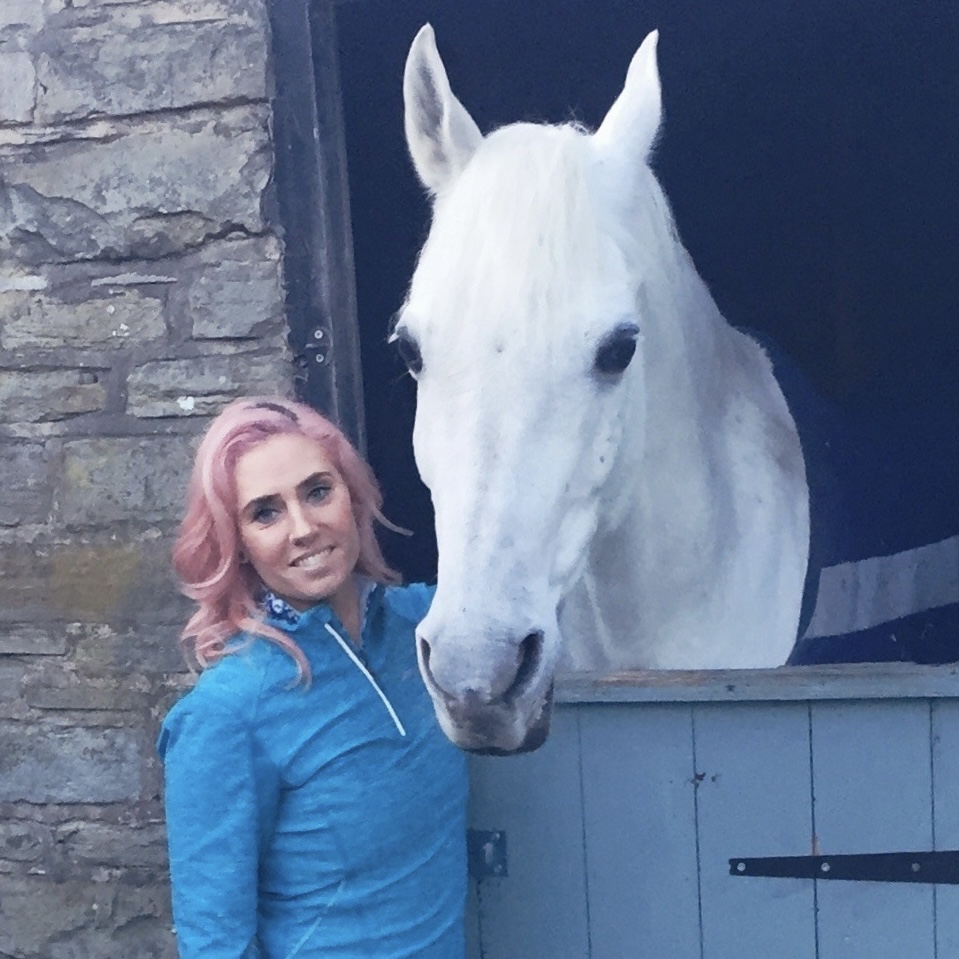
You don’t need to turn every visit to your horse into a veterinary examination. Sometimes, one of the most useful things you can do is simply look.
After more than 35 years around horses, I’ve realised there’s something I do almost automatically whenever I arrive at a stable or field: I check the horse before I start doing anything else.
It isn’t complicated. It doesn’t require any special equipment. And most of the time, it only takes a few minutes.
I’m simply asking myself:
Does everything look normal for this horse today?
The exact check changes slightly depending on whether the horse is stabled or turned out, how well I know them, and how comfortable they are with being approached and handled.
But the principle is always the same.
I start observing before I even reach them.
1. Start before you touch the horse
One of the most useful parts of a horse check happens while you’re still walking towards them.
I look at their general demeanour and stance.
Where are they? What are they doing? Are they standing normally? Resting? Eating? Moving around? Do they notice me approaching?
I’m not expecting every horse to march over to greet me.
If a horse is happily snoozing in their normal spot at the back of the stable or resting a leg and everything else looks comfortable, I don’t necessarily disturb them just to prove they’re okay. Usually they’ll become more alert when they realise someone is at the door, and I’ll give them a little time to come around before I start approaching or handling them.
What matters is whether what I’m seeing makes sense for that particular horse.
A horse who normally looks up immediately when you arrive but suddenly doesn’t is more interesting to me than a naturally laid-back horse quietly resting in their usual place.
That’s why knowing an individual horse’s normal is so valuable.
2. My slightly ridiculous nose-to-tail scan
This is the part that makes me laugh at myself.
As I approach, I automatically do what is essentially a quick inventory of the entire horse:
Two ears. Two eyes. Two nostrils. A mouth. Four legs. And a tail. 😂
Everything present and correct.
Obviously, I’m not genuinely expecting an ear — or an entire leg — to have disappeared overnight.
But that slightly silly mental checklist makes me look at the whole horse properly, rather than glancing across the field and thinking, “Yep, horse looks fine.”
I start at the head. Are both eyes open, clear and comfortable-looking? Are the nostrils clean and clear? Is everything around the mouth looking normal?
I’m checking for blood, unusual discharge, swelling, wounds or anything else that immediately stands out.
Then my eyes travel down the neck, across the body and towards the hindquarters. I’m looking for cuts, marks, lumps, swelling or even something as small as an unusual dark spot that deserves a closer look.
Then down all four legs and finally around the hindquarters and tail.
It’s essentially my first:
Everything where it should be — and nothing where it shouldn’t be.
If something catches my attention, then I take a closer look.
3. Look at all four legs — and how they’re using them
I visually follow each leg all the way down.
I’m looking for obvious cuts, swelling, blood, unusual puffiness or anything else that looks different.
But I’m also looking at the horse as a whole.
Are they comfortably weight-bearing on all four legs? Are they repeatedly taking the weight off one? If they’re moving around, do they appear to be using all four legs comfortably?
If I know the horse and they’re happy to be handled, I’ll often run my hands down their legs too. That can help me notice heat or swelling that may not be particularly obvious from looking alone.
Then I look at the feet.
If they’re shod, are all the shoes still there and sitting as they should? Are there any obvious cracks, damage or anything unusual about the hoof?
I’m not trying to perform a detailed soundness examination during a quick daily check.
I’m looking for change.
4. Don’t forget the bits that are easy to miss
It’s easy to look at the side of the horse facing you and assume the rest must be fine.
So I’ll make sure I see both sides.
When moving around the hind end, I give the horse plenty of space and make sure they know where I am. I’ll visually check the tail, hindquarters and backs of the legs, as well as looking underneath the belly and around the groin area where appropriate.
Again, I’m looking for swelling, wounds, discharge, irritation or anything else unusual.
This became particularly ingrained in me while living and working with horses in Australia, where ticks could hide in areas that weren’t immediately visible.
Different environments bring different things to be aware of, but the underlying habit is the same:
Actually look at the whole horse.
5. If there’s a rug, look underneath it
A rug can hide an enormous amount of horse.
If a horse is rugged, I don’t consider looking at the rug to be the same as checking the horse underneath it.
I also look at the rug itself.
Has it slipped? Are the straps sitting correctly? Has anything become caught or twisted?
If a rug is hanging off or clearly displaced, that becomes the priority. I’ll remove it and check the horse carefully before putting it back on, because a slipped or tangled rug may have rubbed, caught or caused an injury somewhere underneath.
Even when everything looks perfectly normal, removing and resetting rugs regularly gives you the opportunity to actually see and feel the horse underneath them.

6. Let the stable tell you what happened overnight
When a horse is stabled, I’m not only looking at the horse.
The stable tells a story too.
Has the horse eaten the amount of hay I’d expect?
Have they eaten their hard feed?
What has happened to their water?
Does the bed look reasonably normal for them?
Are there a normal-looking number of droppings and signs that they’ve urinated?
None of those things necessarily tells you very much in isolation. Horses vary enormously in their habits.
But when you know what is typical for an individual horse, their stable can give you useful information about what has happened since you last saw them.
And I’m still watching the horse while I’m doing the jobs around them.
How are they behaving? How are they standing? How are they moving around the stable? Is their expression normal? Are they shifting their weight differently or holding a leg differently from usual?
It all becomes part of the same overall picture.
7. Watch what happens when they move
Sometimes a horse standing still doesn’t tell you everything.
As they move around the stable or field, I watch.
Are they moving comfortably on all four feet?
Does anything look stiff or unusual?
Are they shifting their weight differently?
Does their posture look normal?
Again, I’m not necessarily looking for a specific problem.
I’m asking:
Does this look like this horse?
That distinction matters.
The aim isn’t to compare every horse with some imaginary picture of the “perfect” horse. It’s to become familiar enough with the individual in front of you that you notice when something about their normal has changed.
8. Check the environment too
My check doesn’t stop at the horse.
If they’re turned out, I’ll do a quick scan of the field as I go.
Is there adequate clean water?
If hay is being provided, do they have enough?
Does the fencing look intact?
Is there anything in the paddock that shouldn’t be there?
Does anything look different from the last time I was there?
Most days, there is absolutely nothing interesting to find — and that’s exactly what you want.
But a quick environmental scan can catch the trough that needs topping up, the section of fencing that needs attention, or something else that could become a problem if nobody notices it.
The aim isn’t to find something wrong
This is probably the most important part of the whole check.
I’m not approaching a horse every day expecting to discover a problem.
I’m learning what right looks like.
Their normal expression.
Their normal stance.
Their normal appetite.
Their normal movement.
Their normal behaviour when they see someone approaching.
Even what their stable tends to look like in the morning.
The more familiar those things become, the easier it can be to recognise when something is different.
And sometimes the change is tiny.
It might simply be that the horse who usually meets you at the gate is standing elsewhere.
They’ve left some food they would normally finish.
One leg looks a little puffier than it did yesterday.
Their expression just isn’t quite the same.
None of those observations automatically tells you why something has changed.
Noticing is the first step — not diagnosing.
If something doesn’t look right, that’s the point at which I slow down, look more closely and, where appropriate, seek veterinary advice.
My simple 15-minute horse check
If I had to reduce everything I naturally do to one simple rhythm, it would be:
Observe from a distance → Scan nose to tail → Check legs and feet → Look underneath rugs → Watch movement → Check food, water and droppings → Scan the environment.
It doesn’t need to become an elaborate ritual.
Some days the whole process takes only a few minutes because everything looks completely ordinary.
Other days, something catches your attention and those few minutes naturally turn into a more thorough check.
The important part is the habit of looking before doing.
Before the mucking out.
Before changing rugs.
Before filling haynets.
Before getting caught up in all the jobs that come with keeping horses.
Take a moment and simply look at the horse.
Know their normal. Notice the change.
Good horse care isn’t always found in the big interventions.
Very often, it’s found in the quiet, everyday habit of paying attention.
The more we know our horses, the more easily we can recognise the small changes that tell us something may need our attention.
Observe what is. Maintain what matters. Adjust when needed.
A calmer way to keep track of everyday horse care
This same philosophy sits behind The Quiet Care Method™, the printable horse-care journal I created for Bridle & Paw.
Rather than trying to record absolutely everything, it provides a calm, practical structure for the things that matter — from your horse’s normal baselines and everyday observations to routines, management, planning and seasonal changes.
It’s built around three simple rhythms:
Daily · Observe
Know your horse’s everyday normal.
Monthly · Maintain
Keep care and routines organised.
Seasonal · Adjust
Review what has changed and respond.
Because good care doesn’t have to mean keeping more information.
Sometimes it simply means noticing more.
This article is intended as general horse-care information only and does not replace veterinary advice. If you have concerns about your horse’s health, behaviour or wellbeing, contact your veterinarian or another appropriately qualified equine professional.


Comments